
Stretch Affect

how we gain muscle regardless of sex

Reading
how we gain muscle regardless of sex
#
minutes
No items found.
expertly reviewed by
Evan Jeffries
stretch affect
February 19, 2026

Here is what the research shows about how we gain muscle and strength regardless of sex.

When it comes to building a stronger, more muscular physique, the fitness world is full of heated debates. Should you use free weights or machines? Do women respond differently than men? Is it better to train fasted or fed?

According to the latest scientific evidence, many of these rules are far less rigid than we’ve been led to believe.

TL; DR Key Takeaways

  • Women build muscle at nearly the same relative rate as men: While men may gain slightly more total muscle due to starting size, percentage increases in muscle growth are nearly identical (only ~0.69% difference).
  • Free weights and machines are equally effective for growth: Research shows no significant difference in muscle hypertrophy or overall strength gains—results depend more on consistency and training specificity than equipment choice.
  • Muscle growth happens across rep ranges: Both heavy (low-rep) and lighter (high-rep) lifting build strength and size—as long as sets are taken close to failure (within 1–2 reps).
  • Fasted vs. fed training doesn’t change long-term gains: A 12-week trial showed similar improvements in muscle size, strength, and power whether participants trained fasted or after eating.
  • Sprint intervals are most time-efficient for mitochondrial gains: SIT was ~2–4x more efficient per hour than traditional endurance training for improving muscle mitochondrial content.
  • HIT may edge out others for VO₂ max: While SIT boosts efficiency, high-intensity interval training showed a tendency for greater improvements in aerobic capacity.
  • Consistency matters more than method: The body adapts to various training and nutrition strategies—choose the approach you can stick with long term.

Men and Women Have Similar Potential for Muscle Growth

A common myth suggests that women cannot gain muscle or strength as effectively as men due to hormonal differences. However, while men may see larger absolute increases in muscle size, the relative increases (the percentage of growth compared to where you started) are remarkably similar between the sexes.

A 2025 meta-analysis investigated absolute and relative changes in muscle size following resistance training between healthy males and females, ages 18-45, following the same training plan, and whether measures of muscle size, body part, muscle fibre type, and resistance training experience affected the results.

Findings showed:

  • Men gained slightly more muscle in total size (because they usually start bigger).
  • When you look at percentage growth, men and women grew muscle at essentially the same rate. On average, men’s percentage increase in muscle was only 0.69% higher than women.

"Our findings strengthen the understanding that females have a similar potential to induce muscle hypertrophy as males (particularly when considering relative increases in muscle size from baseline)." — Refalo et al. (2025)

This data shows the biological potential for hypertrophy is a human trait, not a gendered one, suggesting that the strength gap is more a product of initial baseline levels than a difference in potential.

woman and man holding plank side by side

Free Weights vs. Machines: Does it Matter?

Conventional wisdom dictates that free weights are the superior modality for "functional" strength, while machines are relegated to the aesthetic fringes. However, a 2023 meta-analysis in the Sports Science, Meditation and Rehabilitation Journal meta-provides a much-needed correction to this narrative.

This comprehensive meta-analysis found no significant differences between free weights and machines for increasing muscle hypertrophy or maximal dynamic strength.

The researchers analyzed outcomes across 13 studies and found that the strength gains are specific to the tool you practice with: if you want to squat more weight on a barbell, you must train with a barbell. Yet, when looking at broader physiological markers, the actual growth of the muscle tissue is similar regardless of the equipment. The choice between the two really comes down to individual preference and specific goals.

Whether you choose the stabilized environment of a leg press machine or the stabilization demands of a back squat, your muscles are indifferent to the source of the mechanical tension. This finding underscores the most effective equipment is the one that you are most likely to use consistently.
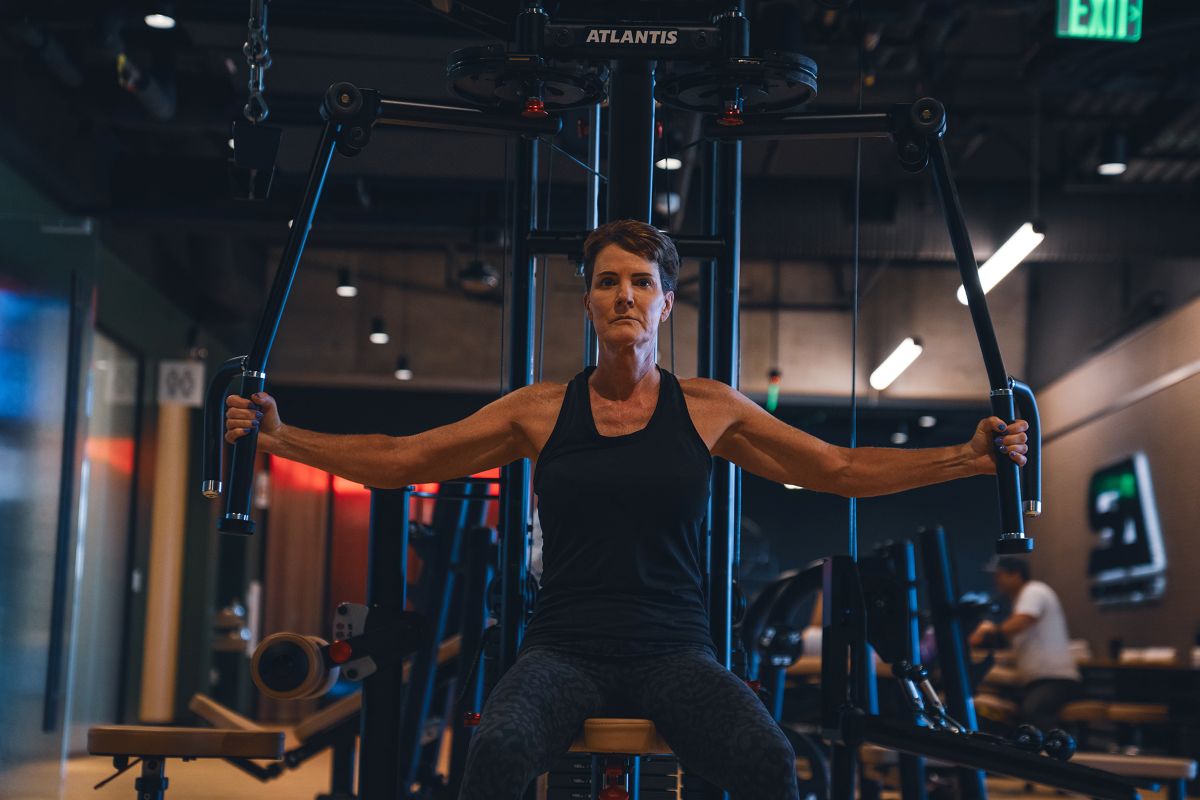
woman using chest fly machine

Rep Ranges: Low, Moderate, or High?

Whether you prefer lifting heavy for a few reps or lighter weights for many, your muscles can grow effectively either way. Studies comparing different intensities (such as 50% vs. 75% of your one-rep max) found that both were effective for increasing strength.

Even in specific populations like postmenopausal women, both high-load (heavy weights, low reps) and high-repetition (lighter weights, more reps) protocols proved effective for increasing muscle size and strength. The key is the level of effort; as long as the training is intensive enough (performing reps within 1-2 reps of failure), the body adapts.

Ultimately, the findings suggest that low-intensity resistance training is a highly effective alternative for improving fitness in women who may not be able to perform high-intensity exercise.

Endurance Capacity: Differences Between Low, Moderate, and High Intensity

The main aim of this study was to compare the effects of low- or moderate intensity continuous endurance training (ET), high-intensity interval or continuous training (HIT), and sprint interval training (SIT) on changes in skeletal muscle mitochondrial content and capillarization.

Increased mitochondrial content in our muscles, leads to greater energy production; and increased capillarization leads to better oxygen delivery.

Per total hour of exercise, Sprint Interval Training (SIT)—characterized by "all-out" bursts—was approximately 2.3 times more efficient at increasing mitochondrial content than High-Intensity Interval Training (HIT) and 3.9 times more efficient than traditional Endurance Training (ET).

For the professional navigating a time-crunched schedule, the "hard and fast" approach yields an outsized metabolic return.

However, there is nuance among the training styles.

While SIT wins the efficiency race for mitochondrial biogenesis, the data also showed a tendency for greater improvement in VO2 max—the gold standard of aerobic capacity—within the HIT cohort compared to both ET and SIT.

This suggests that while we can achieve mitochondrial density through brevity, the absolute peak of cardiovascular performance still leans toward the slightly longer, sustained intensity of interval training.

woman running stairs

Fasted vs. Fed: Fueling Your Workout Session

A 2025 12-week clinical trial compared individuals training in an overnight fasted state versus a fed state (consuming a carbohydrate-rich meal 1-2 hours before working out).

The sample consisted of 28 women and men aged between 20 and 40 years old who were not engaged in regular resistance training.

Participants were allocated to one of two different interventions:

Fasting: Participants performed two weekly resistance exercise sessions after an overnight fast (10–12 hours) over 12 weeks.

Fed: Participants performed two weekly resistance exercise sessions in the fed state (between 1 and 2 hours after consuming a carbohydrate-rich meal) over 12 weeks.

The results were clear: both groups showed similar improvements in muscle thickness, maximum dynamic strength, and muscle power.

Whether you prefer a pre-workout meal or training on an empty stomach, the long-term adaptations in muscle hypertrophy and neuromuscular performance remain largely the same. Furthermore, other research on nutrient timing in females found no significant differences in body composition changes whether nutrition was consumed pre- or post-workout.

If training fasted makes you feel lethargic, there is no scientific penalty for eating. Conversely, if you prefer the lightness of an empty stomach, your gains are not at risk.

Bottom line, do what makes you feel the best.

With the latest data from clinical trials and meta-analyses there is supporting information that the human body is far less picky than the fitness industry suggests.

Ultimately how we gain muscle regardless of sex is to stay consistent with the workout that offers the least resistance to your lifestyle.

Specialty Program - Youth
No items found.
expertly reviewed by
Evan Jeffries
stretch affect
February 19, 2026

Here is what the research shows about how we gain muscle and strength regardless of sex.

When it comes to building a stronger, more muscular physique, the fitness world is full of heated debates. Should you use free weights or machines? Do women respond differently than men? Is it better to train fasted or fed?

According to the latest scientific evidence, many of these rules are far less rigid than we’ve been led to believe.

TL; DR Key Takeaways

  • Women build muscle at nearly the same relative rate as men: While men may gain slightly more total muscle due to starting size, percentage increases in muscle growth are nearly identical (only ~0.69% difference).
  • Free weights and machines are equally effective for growth: Research shows no significant difference in muscle hypertrophy or overall strength gains—results depend more on consistency and training specificity than equipment choice.
  • Muscle growth happens across rep ranges: Both heavy (low-rep) and lighter (high-rep) lifting build strength and size—as long as sets are taken close to failure (within 1–2 reps).
  • Fasted vs. fed training doesn’t change long-term gains: A 12-week trial showed similar improvements in muscle size, strength, and power whether participants trained fasted or after eating.
  • Sprint intervals are most time-efficient for mitochondrial gains: SIT was ~2–4x more efficient per hour than traditional endurance training for improving muscle mitochondrial content.
  • HIT may edge out others for VO₂ max: While SIT boosts efficiency, high-intensity interval training showed a tendency for greater improvements in aerobic capacity.
  • Consistency matters more than method: The body adapts to various training and nutrition strategies—choose the approach you can stick with long term.

Men and Women Have Similar Potential for Muscle Growth

A common myth suggests that women cannot gain muscle or strength as effectively as men due to hormonal differences. However, while men may see larger absolute increases in muscle size, the relative increases (the percentage of growth compared to where you started) are remarkably similar between the sexes.

A 2025 meta-analysis investigated absolute and relative changes in muscle size following resistance training between healthy males and females, ages 18-45, following the same training plan, and whether measures of muscle size, body part, muscle fibre type, and resistance training experience affected the results.

Findings showed:

  • Men gained slightly more muscle in total size (because they usually start bigger).
  • When you look at percentage growth, men and women grew muscle at essentially the same rate. On average, men’s percentage increase in muscle was only 0.69% higher than women.

"Our findings strengthen the understanding that females have a similar potential to induce muscle hypertrophy as males (particularly when considering relative increases in muscle size from baseline)." — Refalo et al. (2025)

This data shows the biological potential for hypertrophy is a human trait, not a gendered one, suggesting that the strength gap is more a product of initial baseline levels than a difference in potential.

woman and man holding plank side by side

Free Weights vs. Machines: Does it Matter?

Conventional wisdom dictates that free weights are the superior modality for "functional" strength, while machines are relegated to the aesthetic fringes. However, a 2023 meta-analysis in the Sports Science, Meditation and Rehabilitation Journal meta-provides a much-needed correction to this narrative.

This comprehensive meta-analysis found no significant differences between free weights and machines for increasing muscle hypertrophy or maximal dynamic strength.

The researchers analyzed outcomes across 13 studies and found that the strength gains are specific to the tool you practice with: if you want to squat more weight on a barbell, you must train with a barbell. Yet, when looking at broader physiological markers, the actual growth of the muscle tissue is similar regardless of the equipment. The choice between the two really comes down to individual preference and specific goals.

Whether you choose the stabilized environment of a leg press machine or the stabilization demands of a back squat, your muscles are indifferent to the source of the mechanical tension. This finding underscores the most effective equipment is the one that you are most likely to use consistently.

woman using chest fly machine

Rep Ranges: Low, Moderate, or High?

Whether you prefer lifting heavy for a few reps or lighter weights for many, your muscles can grow effectively either way. Studies comparing different intensities (such as 50% vs. 75% of your one-rep max) found that both were effective for increasing strength.

Even in specific populations like postmenopausal women, both high-load (heavy weights, low reps) and high-repetition (lighter weights, more reps) protocols proved effective for increasing muscle size and strength. The key is the level of effort; as long as the training is intensive enough (performing reps within 1-2 reps of failure), the body adapts.

Ultimately, the findings suggest that low-intensity resistance training is a highly effective alternative for improving fitness in women who may not be able to perform high-intensity exercise.

Endurance Capacity: Differences Between Low, Moderate, and High Intensity

The main aim of this study was to compare the effects of low- or moderate intensity continuous endurance training (ET), high-intensity interval or continuous training (HIT), and sprint interval training (SIT) on changes in skeletal muscle mitochondrial content and capillarization.

Increased mitochondrial content in our muscles, leads to greater energy production; and increased capillarization leads to better oxygen delivery.

Per total hour of exercise, Sprint Interval Training (SIT)—characterized by "all-out" bursts—was approximately 2.3 times more efficient at increasing mitochondrial content than High-Intensity Interval Training (HIT) and 3.9 times more efficient than traditional Endurance Training (ET).

For the professional navigating a time-crunched schedule, the "hard and fast" approach yields an outsized metabolic return.

However, there is nuance among the training styles.

While SIT wins the efficiency race for mitochondrial biogenesis, the data also showed a tendency for greater improvement in VO2 max—the gold standard of aerobic capacity—within the HIT cohort compared to both ET and SIT.

This suggests that while we can achieve mitochondrial density through brevity, the absolute peak of cardiovascular performance still leans toward the slightly longer, sustained intensity of interval training.

woman running stairs

Fasted vs. Fed: Fueling Your Workout Session

A 2025 12-week clinical trial compared individuals training in an overnight fasted state versus a fed state (consuming a carbohydrate-rich meal 1-2 hours before working out).

The sample consisted of 28 women and men aged between 20 and 40 years old who were not engaged in regular resistance training.

Participants were allocated to one of two different interventions:

Fasting: Participants performed two weekly resistance exercise sessions after an overnight fast (10–12 hours) over 12 weeks.

Fed: Participants performed two weekly resistance exercise sessions in the fed state (between 1 and 2 hours after consuming a carbohydrate-rich meal) over 12 weeks.

The results were clear: both groups showed similar improvements in muscle thickness, maximum dynamic strength, and muscle power.

Whether you prefer a pre-workout meal or training on an empty stomach, the long-term adaptations in muscle hypertrophy and neuromuscular performance remain largely the same. Furthermore, other research on nutrient timing in females found no significant differences in body composition changes whether nutrition was consumed pre- or post-workout.

If training fasted makes you feel lethargic, there is no scientific penalty for eating. Conversely, if you prefer the lightness of an empty stomach, your gains are not at risk.

Bottom line, do what makes you feel the best.

With the latest data from clinical trials and meta-analyses there is supporting information that the human body is far less picky than the fitness industry suggests.

Ultimately how we gain muscle regardless of sex is to stay consistent with the workout that offers the least resistance to your lifestyle.

What’s a Rich Text element?

The rich text element allows you to create and format headings, paragraphs, blockquotes, images, and video all in one place instead of having to add and format them individually. Just double-click and easily create content.

  • sdbare
  • sbearb

Static and dynamic content editing

  1. reshb
  2. rferh
Stretch Affect

A rich text element can be used with static or dynamic content. For static content, just drop it into any page and begin editing. For dynamic content, add a rich text field to any collection and then connect a rich text element to that field in the settings panel. Voila!

How to customize formatting for each rich text

Headings, paragraphs, blockquotes, figures, images, and figure captions can all be styled after a class is added to the rich text element using the "When inside of" nested selector system.

SAfeqga

Ready to move?

book a consultation