

In the world of health and fitness, protein goals for building muscle is often treated with a level of reverence bordering on obsession. From "anabolic windows" to the debate over plant versus animal sources, the average gym-goer is bombarded with conflicting advice. However, recent large-scale scientific reviews and clinical trials have begun to clear the fog, offering a more pragmatic and evidence-based approach for ideal protein goals for building muscle and maintaining health.
Current research suggests that while protein is essential, its role in gaining muscle is secondary to the actual work performed in the weight room, and many of the rules we’ve been told about timing and source may not be as rigid as once thought.
Based on the latest scientific meta-analyses and cohort studies, here is how you should structure your protein goals for building muscle:
Protein is a fundamental structural element of skeletal muscle and is primarily composed of amino acids. Within these amino acids, 9 are "essential" (we have to get them from food) and 11 are "non-essential" (the body can produce them).
When you eat protein, the following processes occur in your body:
When you eat more protein than your muscles can use for repair and growth, your body switches gears:
One of the most persistent myths in fitness is that more is always better when it comes to protein. However, the sources suggest there is a clear point of diminishing returns.
With a protein goal for building muscle, we should aim to consume ~1.4-1.6 g per kg (~0.7 g per lb) bodyweight of protein per day. Total intake matters the most, so don't stress about protein timing or grams per meal.
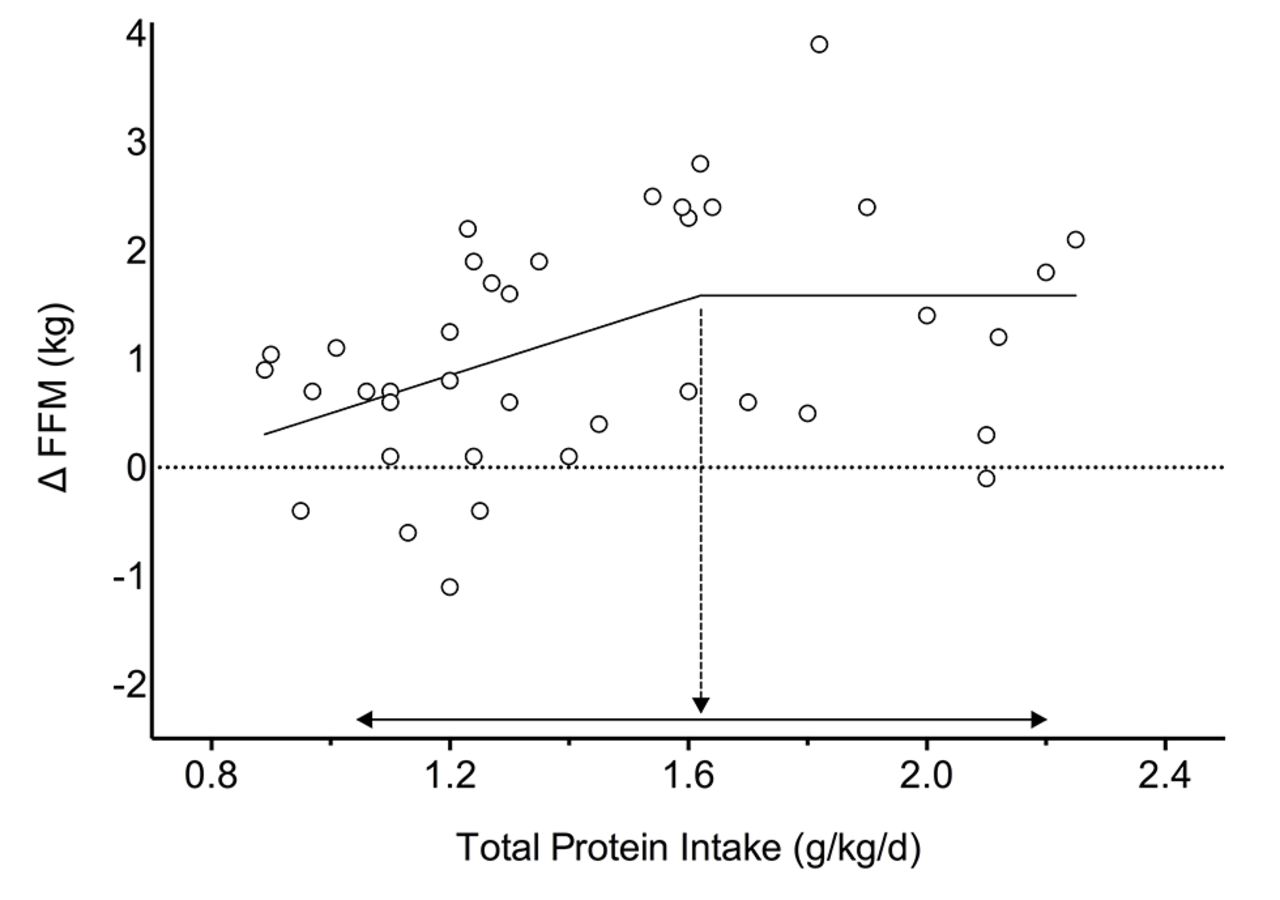
According to the analysis by Morton et al. in the British Journal of Sports Medicine, which reviewed 49 studies and over 1,800 participants:
Protein supplementation beyond a total daily intake of 1.62 g/kg of body weight resulted in no further gains in muscle.
While the researchers noted a 95% confidence interval that extends up to 2.2 g/kg—suggesting that some individuals (elite athletes, bodybuilders) might benefit from higher amounts—the break-point where the average person stops seeing additional muscle-building benefits is ~1.6 g/kg/day.
Tagawa et al. (2022) reached a nearly identical conclusion to examine dose-response relationships. They found that muscle strength increases with total protein intake up to approximately 1.5 g/kg/day, after which the gains plateau.
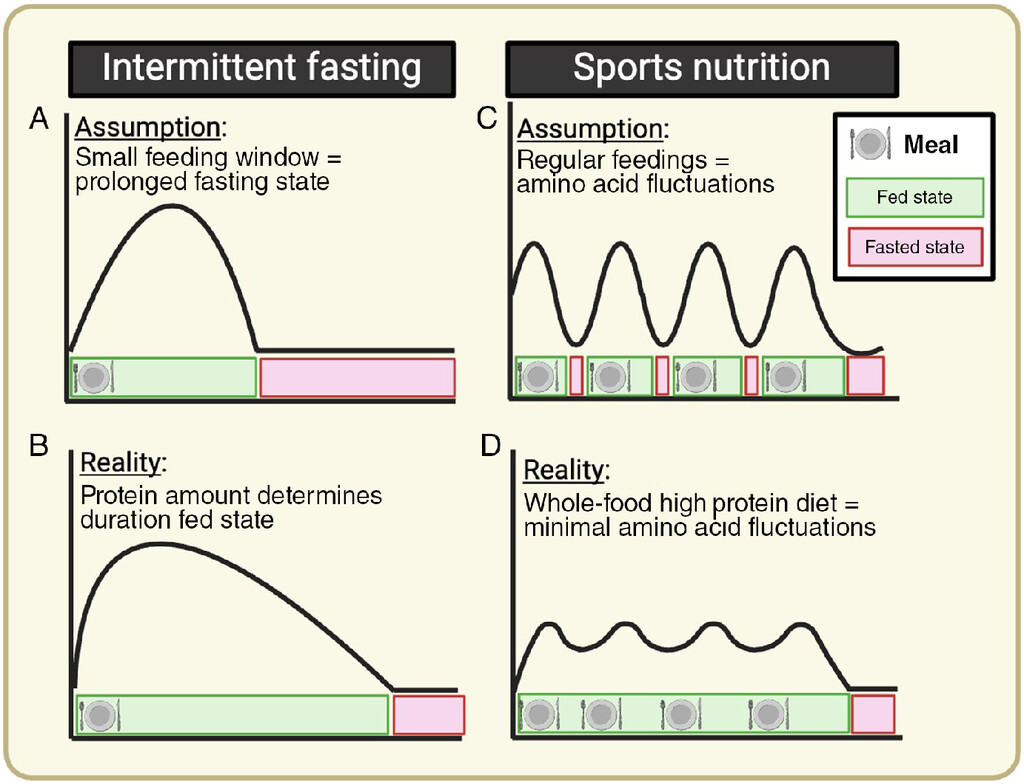
It is common for athletes or fitness enthusiasts to believe they need to eat every three hours to maintain a steady balance of amino acids, or to consume protein within 30 minutes of a workout, but recent evidence from Trommelen et al. (2024) challenges this protein distribution concept.
If athletes/trained individuals consume 1.5–2.0 g protein per kilogram body mass per day, with the majority consumed as whole foods in mixed meals during breakfast, lunch, and dinner; this diet likely results in continuous hyperaminoacidemia (excess amino acids) with relatively little fluctuations irrespective of when it is consumed.
In practice, this means that for athletes and recreational lifters, total daily protein intake is more important than meal frequency. You don't need to sacrifice sleep to drink a protein shake in the middle of the night, nor do you need to panic if you can't eat immediately after a workout. As long as you hit your total protein goal for the day, your body is remarkably efficient at utilizing those amino acids for muscle conditioning.
One of the most heated debates in nutrition is whether plant-derived proteins can support muscle growth as effectively as animal-derived ones. The short answer is: Yes, if you reach your daily protein goal for building muscle.
A clinical trial published in The Journal of Nutrition (2023) compared young adults on a high-protein vegan diet to those on an omnivorous diet. Both groups consumed ~2 g/kg/day of protein and followed a 10-week resistance training program. The results showed no difference between the groups in terms of muscle fiber cross-sectional area, whole-body lean mass, or strength gains. Both diets supported comparable rates of myofibrillar protein synthesis.
However, there are nuances regarding protein quality. For building muscle, soy protein is the gold standard of plants. A 2025 systematic review in Nutrition Reviews found that animal protein might have a small beneficial effect over non-soy plant proteins (like rice, oat, or wheat) for increasing muscle mass, likely due to higher concentrations of branched-chain amino acids like leucine.
A 2021 study comparing exclusively plant versus meat based diets and muscle adaptations showed a high-protein (~ 1.6 g kg−1 day−1), exclusively plant-based diet (plant-based whole foods + soy protein isolate supplementation) is not different than a protein-matched mixed diet (mixed whole foods + whey protein supplementation) in supporting muscle strength and mass accrual.
If your goal is to increase muscle strength or size, no amount of protein—no matter the source or quality—will save you if you aren't lifting weights. A comprehensive dose-response meta-analysis published in Sports Medicine - Open (2022) highlights a critical truth: protein supplementation significantly augments muscle strength gains only when combined with resistance training.
In studies where participants increased their protein intake without engaging in resistance training, there was no significant increase in muscle strength. This is because muscle strength is determined by a complex interplay of muscular hypertrophy, neural adaptations (like increased motor unit recruitment), and metabolic adaptations. While protein supports hypertrophy, it plays a minor role in the neural and metabolic changes that only occur when you physically challenge your muscles.
Similarly, the massive meta-analysis by Morton et al. (2018) in the British Journal of Sports Medicine confirmed that while protein supplementation does enhance gains, the practice of resistance training itself is a far more potent stimulus for increasing strength and mass than the addition of dietary protein. In short, lifting weights is the engine; protein is merely the high-quality fuel that helps it run more efficiently.
The approach to longevity is to perform resistance training and consume adequate total protein (~1.6 g/kg) to build your physique. Both plant-based sources and high-quality lean meats will protect your heart and ensure you remain functional as you age.
The general American population typically hit their protein goals for building muscle without even trying, but completely miss out on muscle growth by not lifting weights.
Get started on your lifting program with our qualified movement health specialists at Stretch Affect. Check out all you will learn with our initial assessment.

Psst...if you made it this far, congratulations! You're clearly a master of fine print detection. Now, let's put those detective skills to good use and schedule a consultation call or reach out through the little buttons below.
Psst...if you made it this far, congratulations! You're clearly a master of fine print detection. Now, let's put those detective skills to good use and schedule a consultation call to see how this all works in real life.
